Excavation & 7-Layer Waterproofing in Springfield, MO
Professional excavation and comprehensive waterproofing systems engineered for Missouri's challenging clay soils and high water tables. Our veteran-owned team delivers 7-layer moisture protection rated for 15+ PSI lateral earth pressure, with all structural designs stamped by licensed Missouri engineers.
Understanding Missouri's Excavation Challenges
Southwest Missouri's geology presents excavation challenges that distinguish our region from most of the country. The surface layers consist predominantly of expansive montmorillonite clay—soil that swells dramatically when moisture content increases and shrinks during dry periods. This cyclical movement generates lateral earth pressures against buried structures that can exceed 15 pounds per square inch, forces that will crack and displace structures not specifically engineered for these conditions.
Beneath the clay layers, the Springfield Plateau's karst limestone geology creates additional complexity. Limestone bedrock appears at depths ranging from 8 to 25 feet depending on location, requiring specialized excavation equipment for penetration. The same geology creates underground drainage channels that produce variable groundwater conditions—a property may have no water issues during dry months but experience significant infiltration during wet seasons.
Our excavation approach accounts for all these factors. We assess soil composition, measure groundwater levels, and identify bedrock depth during site evaluation. This data drives excavation planning including equipment selection, shoring requirements, and dewatering strategies. All excavation designs are reviewed by licensed Missouri professional engineers familiar with local conditions.

Our 7-Layer Waterproofing System
Redundant moisture protection ensuring dry interior conditions for decades. Each layer addresses specific failure modes—multiple barriers must fail simultaneously for moisture to reach interior spaces.
Crystalline Waterproofing Admixture
Mixed directly into concrete during batching, crystalline admixtures react with moisture to grow crystite structures that seal pores and micro-cracks in the concrete matrix. Self-healing capability addresses hairline cracks that develop over time.
Bentonite Clay Panels
Sodium bentonite clay sandwiched between geotextile layers swells when exposed to moisture, creating a self-sealing barrier against the exterior concrete surface. Bentonite's expansion fills gaps and seals around penetrations.
Liquid-Applied Membrane
Spray or roller-applied waterproofing membrane creates a continuous, seamless barrier across all concrete surfaces. Elastomeric formulations accommodate structural movement and crack bridging.
HDPE Dimple Mat Drainage Board
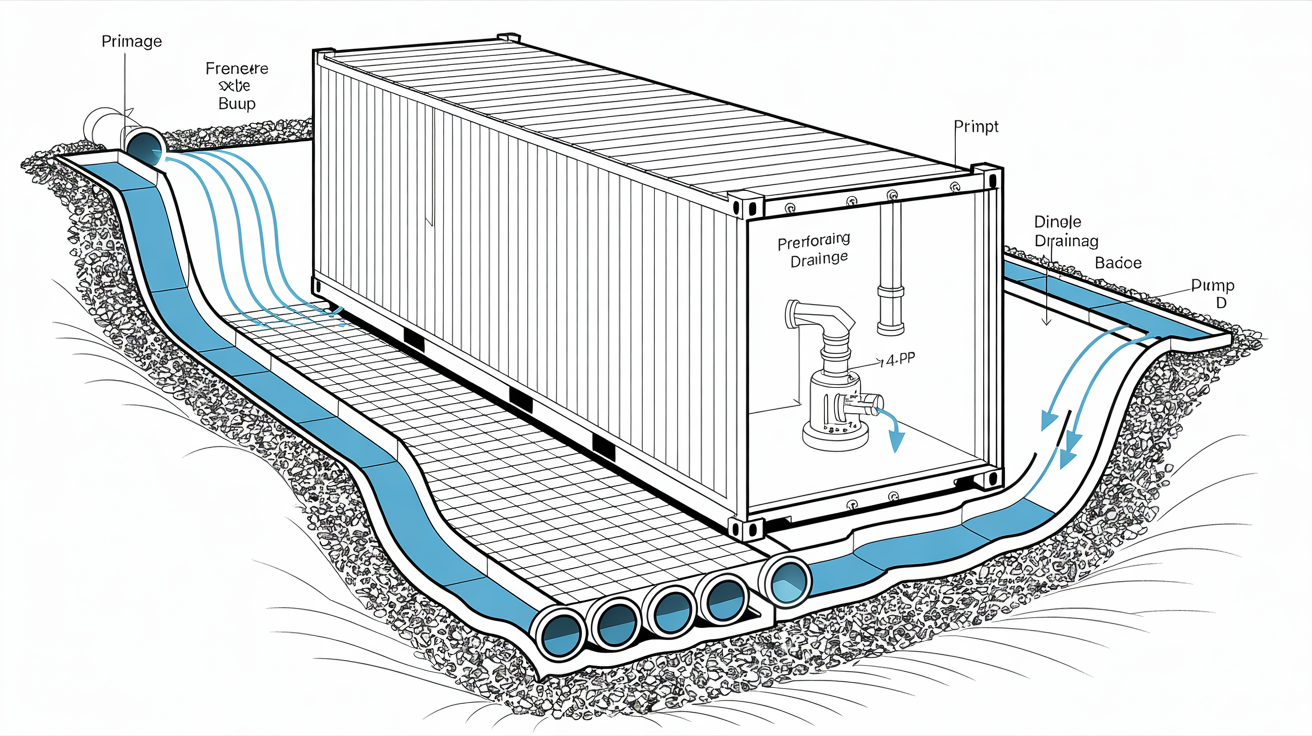
High-density polyethylene dimple mat creates an air gap between the waterproofing membrane and backfill, allowing water to drain downward rather than building pressure against the structure.
Filter Fabric
Geotextile filter fabric wraps the drainage board and French drain system, preventing soil particles from migrating into drainage pathways while allowing water to pass freely.
French Drain Perimeter System
Perforated pipe in gravel bedding surrounds the structure at footing level, collecting water that drains down the dimple mat and directing it to the sump system. Gravity-flow design requires no power.
Sump Pump with Battery Backup
Primary and backup sump pumps evacuate collected water from the drainage system. Battery backup ensures continuous operation during power outages when storm-related infiltration is often highest.
Engineering Standards for Missouri Conditions
Every excavation and waterproofing design receives review by licensed Missouri professional engineers with specific experience in underground construction. Structural calculations address lateral earth pressures based on actual soil testing, not generic assumptions. Waterproofing specifications account for measured groundwater levels and seasonal variations observed at your specific site.
Wall thickness designs for typical 10-15 foot depth bunkers specify 8-10 inch reinforced concrete with #4 or #5 rebar at 6-8 inch spacing. Deeper installations facing higher soil pressures may require 12+ inch walls with additional reinforcement. These specifications ensure structural integrity against Missouri's 15+ PSI clay soil pressures throughout the structure's 50+ year design life.
Waterproofing systems receive similar engineering attention. Drainage capacity calculations ensure French drain systems can handle peak infiltration rates during multi-day rain events. Sump pump sizing accounts for these flows with appropriate safety factors. This engineering approach delivers waterproofing systems that perform reliably for decades, not just years.
Our Excavation Process
Site Preparation
Mark utilities, establish access routes, install erosion controls, and position equipment staging areas. Coordinate with utility locators for all underground services.
Excavation
Remove soil in engineered lifts with proper side slopes or shoring. Manage groundwater with dewatering systems as needed. Stockpile suitable material for backfill.
Base Preparation
Grade excavation bottom to precise tolerances. Install compacted gravel base for drainage and structural support. Verify elevations before concrete work.
Backfill & Compaction
After waterproofing installation, backfill in engineered lifts with proper compaction. Final grading directs surface water away from structure.
Excavation & Waterproofing Services Throughout Southwest Missouri
Our veteran-owned team provides excavation and waterproofing services across the Springfield metropolitan area. We've completed projects throughout Greene, Christian, Webster, Stone, and Taney counties, developing detailed knowledge of regional soil conditions and groundwater patterns that inform our design and specification approach.
Excavation & Waterproofing FAQs
Why does Missouri soil require special excavation techniques?
Missouri's expansive clay soils (primarily montmorillonite) behave dramatically differently than soils in other regions. These clays swell when wet and shrink when dry, generating lateral pressures against buried structures that can exceed 15 PSI. Excavation must account for proper side slopes, temporary shoring where required, and careful management of groundwater that clay impedes from draining naturally.
What is a 7-layer waterproofing system?
Our 7-layer system creates redundant moisture barriers: (1) Crystalline waterproofing admixture in concrete, (2) Bentonite clay panels against exterior concrete, (3) Liquid-applied waterproofing membrane, (4) HDPE dimple mat drainage board, (5) Filter fabric preventing soil migration, (6) French drain perimeter system, and (7) Sump pump with battery backup. This layered approach ensures that if any single layer is compromised, multiple additional barriers prevent moisture intrusion.
How do you handle high water tables in Springfield?
High water tables create hydrostatic pressure that pushes against bunker structures from below and all sides. Our approach combines structural design for uplift resistance (thickened slabs with appropriate anchoring), comprehensive drainage systems to relieve pressure, and waterproofing membranes rated for continuous immersion. We assess water table levels during site evaluation and design specifically for your property's conditions.
What happens if waterproofing fails?
Waterproofing failure in underground structures leads to progressive damage: initial moisture intrusion causes humidity problems and surface efflorescence, followed by steel reinforcement corrosion, concrete spalling, mold growth, and eventually structural compromise. This is why we specify redundant systems—seven layers means multiple barriers must fail simultaneously for moisture to reach interior spaces.
How long does excavation and waterproofing take?
Excavation typically requires 1-3 weeks depending on depth, soil conditions, and site access. Waterproofing application adds 1-2 weeks for proper curing between layers. These phases cannot be rushed—each waterproofing layer must cure properly before the next is applied, and backfill cannot begin until the complete system is installed and inspected.
Do you provide warranties on waterproofing systems?
Yes. Our waterproofing installations include comprehensive warranties covering materials and workmanship. Individual waterproofing products carry manufacturer warranties ranging from 10-25 years. We also provide our own installation warranty ensuring the complete system performs as designed. Specific warranty terms are detailed in each project proposal.
Start with Professional Site Evaluation
Contact our veteran-owned team for a free consultation. We'll assess your property's soil conditions, groundwater levels, and excavation requirements.