An underground bunker is not a static object. It is an infrastructure environment where mechanical systems, electrical components, and life-support technologies may evolve over time. The equipment installed today will not necessarily be the equipment required in twenty or thirty years. Engineers who understand this reality design bunkers not only for current needs, but for adaptability—creating structures that can accommodate future system upgrades without requiring disruptive reconstruction.
This forward-thinking approach distinguishes professional bunker design from basic shelter construction. A well-designed bunker anticipates change. It includes infrastructure pathways, accessible equipment zones, and modular layouts that allow owners to modernize systems as technology improves, regulations change, or personal requirements evolve. The goal is not to predict which specific technologies will emerge, but to build a structure flexible enough to accept whatever comes next.
Why Underground Systems Eventually Require Modernization
Every mechanical and electrical system has a finite lifespan. Air filtration units, water pumps, battery banks, climate control systems, and communication equipment all degrade over time. Some components may last decades with proper maintenance; others may become obsolete long before they wear out. Technology advances, efficiency standards improve, and replacement parts for older equipment become difficult to source. Eventually, every bunker will require system upgrades—not because something failed catastrophically, but because modernization becomes necessary for continued reliability.
Engineers who recognize this reality from the outset design bunkers that make upgrades manageable. They avoid configurations that would require cutting through reinforced concrete to replace a pump or rewire an electrical panel. Instead, they create clear pathways for system access and replacement, ensuring that future work can be performed efficiently and without compromising the structural integrity of the shelter.
Planning Infrastructure Pathways Before Construction
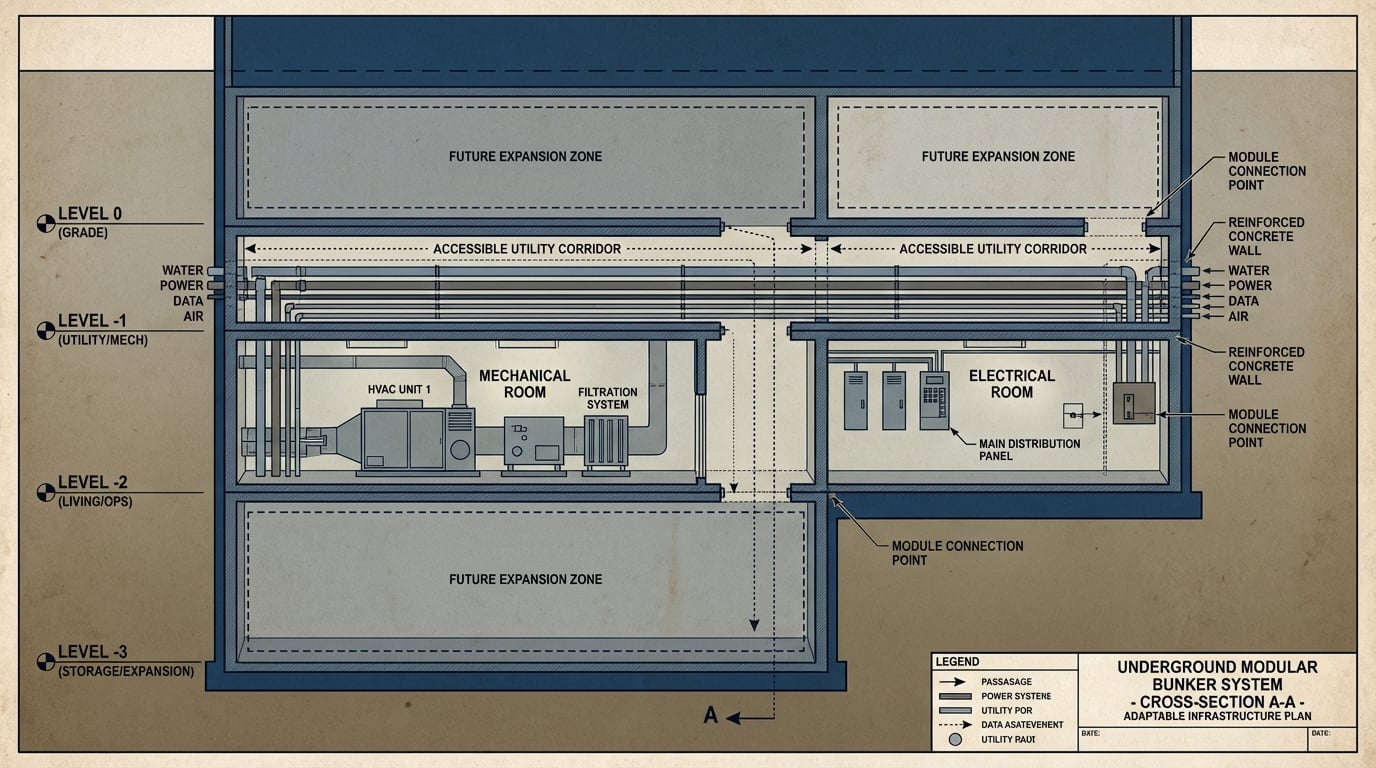
The time to plan for future upgrades is before the first concrete is poured. Once walls are in place and systems are embedded, the cost of modification increases dramatically. Professional engineers identify infrastructure pathways during the design phase—routes through which electrical conduits, plumbing lines, ventilation ducts, and communication cables will travel. These pathways are sized not only for current systems, but with capacity for additional runs that may be needed later.
As discussed in other underground infrastructure planning guides on our blog, decisions made during the earliest design stages have lasting consequences. A pathway that is too narrow or too rigidly configured will constrain every future modification. Conversely, a well-planned corridor with accessible conduit sleeves and sufficient clearance becomes a permanent asset that simplifies maintenance and upgrades for the life of the structure.
Mechanical and Electrical Routing Corridors
Professional bunker designs often include dedicated routing corridors—sections of the structure specifically allocated for mechanical and electrical infrastructure. These corridors may run along walls, above ceilings, or beneath floors, depending on the layout. The key characteristic is accessibility: equipment within these corridors can be inspected, maintained, and replaced without disturbing finished living spaces or requiring structural modifications.
Routing corridors also provide separation between different system types. Electrical wiring can be isolated from plumbing to prevent interference and simplify troubleshooting. Ventilation ducts can be accessed independently from communication cables. This organization reduces the complexity of future work and minimizes the risk that a repair in one system will inadvertently damage another.
Accessible System Layouts for Long-Term Adaptability
Accessibility is a recurring theme in future-ready bunker design. Engineers position equipment where technicians can reach it, inspect it, and remove it if necessary. Pumps are mounted on bases that allow for disconnection and replacement. Electrical panels are installed with working clearance around them. Air handling units are placed in locations where filters can be changed and motors can be serviced without contorting into awkward positions.
This attention to accessibility may seem minor during construction, when everything is new and functioning properly. Its value becomes apparent years later, when a component needs replacement and the difference between an accessible installation and a buried one determines whether the repair takes hours or weeks.
Equipment Rooms and Dedicated Service Zones
Professional bunker designs often include dedicated equipment rooms—spaces specifically allocated for mechanical and electrical systems. These rooms serve multiple purposes. They consolidate critical equipment in one location, making monitoring and maintenance more efficient. They provide controlled environments where temperature and humidity can be managed to extend equipment life. And they create a buffer between noisy mechanical systems and quiet living spaces.
Equipment rooms are typically sized with future expansion in mind. They include floor space for additional equipment that may be installed later, wall area for new panels or controls, and overhead clearance for ducting or cable trays. This reserve capacity ensures that the bunker can grow with changing needs without requiring construction in occupied living areas.
Avoiding Permanent Embedding of Critical Systems
One of the most significant decisions engineers make during bunker design is what to embed permanently and what to keep accessible. Structural elements—foundations, walls, and roof slabs—are necessarily permanent. But systems that may require service or replacement should not be cast into concrete in ways that make future access impossible. Pipes can run through sleeves rather than being encased directly. Electrical conduits can be routed through accessible chases rather than embedded in walls. Equipment can be bolted to mounting plates rather than welded in place.
This philosophy extends to every system in the bunker. As noted in related structural planning articles, the goal is to separate the permanent structure from the replaceable systems it contains. The structure should outlast multiple generations of equipment, and the design should make those equipment transitions as straightforward as possible.
Modular Infrastructure for Upgrade Flexibility
Modular design principles improve upgrade flexibility throughout the bunker. Rather than custom-fabricating every component, engineers specify standardized equipment that can be replaced with newer models as they become available. Electrical systems use standard panel sizes and breaker configurations. Plumbing connections follow common standards that allow for interchangeable fittings. Ventilation systems use standard duct dimensions that accommodate a range of equipment options.
This modularity reduces dependence on specific manufacturers or obsolete product lines. When a component fails or requires upgrading, replacements can be sourced from multiple suppliers rather than requiring custom fabrication or extensive modification. The result is lower long-term maintenance costs and greater confidence that the bunker will remain serviceable for decades.
Reducing Disruptive Structural Work
Every time a bunker requires structural modification to accommodate a system upgrade, there is risk. Cutting into reinforced concrete can compromise waterproofing membranes. Drilling through walls can damage embedded conduits or reinforcement. Opening finished surfaces exposes the interior to dust, debris, and construction activity that disrupts normal use. Future-ready design minimizes these disruptions by anticipating upgrade needs and building in the access required to address them.
The investment in proper planning during initial construction pays dividends throughout the bunker's operational life. Systems can be upgraded during routine maintenance windows rather than requiring extensive renovation projects. The structure remains intact and protected, and the occupants experience minimal inconvenience during necessary modernization work.
Protecting Long-Term Value
A bunker designed for future upgrades retains its value longer than one built only for current requirements. As systems evolve and new technologies become available, a flexible infrastructure can incorporate improvements without requiring complete reconstruction. This adaptability makes the bunker more useful to its current owners and more valuable to potential future owners who may have different requirements or preferences.
Professional engineers understand that they are not simply building a shelter—they are creating infrastructure that will serve multiple generations of occupants and systems. This perspective shapes every design decision, from the layout of equipment rooms to the sizing of conduit pathways to the selection of mounting hardware. The result is a structure that remains relevant and functional regardless of how technology evolves.
Conclusion: Designing for What Comes Next
Future-ready bunker design is not about predicting specific technologies. It is about building a structure flexible enough to accommodate whatever systems may come next. Engineers who embrace this philosophy create bunkers with accessible infrastructure pathways, dedicated equipment zones, modular system layouts, and thoughtful separation between permanent structure and replaceable components.
The equipment installed on day one will eventually be replaced. The question is whether that replacement will be a straightforward maintenance task or a disruptive reconstruction project. Professional engineering answers that question during the design phase, long before the first concrete is poured. By planning for upgrades from the beginning, engineers create bunkers that remain reliable, adaptable, and valuable for decades—not because they predicted the future, but because they built a structure capable of embracing it.
Planning an Underground Bunker in Missouri?
At Bunker Up Buttercup™, we design underground bunkers with future adaptability in mind. Every project includes infrastructure pathways and modular system layouts engineered for long-term flexibility.
Serving Springfield, Nixa, Ozark, Republic, and surrounding counties.
Call 417-895-8733Schedule a professional site consultation.
Bunker Up Buttercup™
Veteran-owned underground bunker construction company serving Springfield, MO and the surrounding 75-mile radius. Licensed general contractor specializing in doomsday bunkers, storm shelters, and survival infrastructure engineered for Missouri's unique soil and weather conditions.
Request a Consultation